Loading the public record
Where They Stand is a nonpartisan guide to everyone running for Congress: their money, their own words and how incumbents voted. Find your ballot →
All recent votes116th CongressHouse and Senate
S. 151Pallone-Thune TRACED Act
- Sponsor
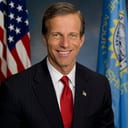
- John Thune [R-SD]
- Cosponsors
- 84 · 42 Democrats · 40 Republicans · 2 Independents
- Policy area
- Science, Technology, Communications
- Committees
- Commerce, Science, and Transportation Committee, Energy and Commerce Committee
- Latest action
- Dec 30, 2019 · Became Public Law No: 116-105.
- IntroducedJan 16, 2019
- Passed the SenateMay 23, 2019
- Passed the HouseDec 4, 2019
- Sent to the PresidentDec 20, 2019
- Became lawDec 30, 2019
Pallone-Thune Telephone Robocall Abuse Criminal Enforcement and Deterrence Act or the Pallone-Thune TRACED Act
This bill establishes rules and requirements to deter criminal robocall violations.
Specifically, the Federal Communications Commission (FCC) must
- require voice service providers to develop call authentication technologies;
- initiate a rulemaking to protect a subscriber from receiving unwanted calls or texts from a caller using an unauthenticated number;
- establish when a provider may block a voice call based on information provided by the call authentication framework, but also establish a process to permit a calling party adversely affected by the framework to verify the authenticity of their calls;
- streamline the ways in which a private entity may voluntarily share information with the FCC relating to a call or text message that violates robocall restrictions;
- determine whether its policies regarding access to number resources could be modified to help reduce access to numbers by potential robocall violators;
- report on the implementation of the reassigned number database;
- implement consumer protections for exempted classes of robocalls;
- ensure opt-out/opt-in robocall blocking services provide transparency and redress options for consumers and callers with no additional line item charge to consumers or additional charge to callers for resolving complaints related to erroneously blocked calls;
- study whether to require a provider of a Voice over Internet Protocol (VoIP) service to give the FCC its contact information and retain a record of each call transmitted over the VoIP service that is sufficient to trace a call back to its source;
- provide the Department of Justice with any evidence obtained suggesting a robocall violation made with an intent to defraud or cause harm;
- protect called parties from one-ring scams (where a caller allows the call to ring for a short duration to prompt the called party to return the call and incur charges);
- establish a registration process for a single consortium that conducts private-led efforts to trace back the origin of suspected unlawful robocalls; and
- establish the Hospital Robocall Protection Group to issue best practices for combating unlawful robocalls made to hospitals, helping hospitals protect themselves, and assisting federal and state governments to combat such calls.
The bill also implements a forfeiture penalty for violations (with or without intent) of the prohibitions on certain robocalls.
Written by the nonpartisan Congressional Research Service, describing S. 151 as public Law on Dec 30, 2019. It is not the text of the measure; a later amendment may have changed what it does.